- Dr. Elsie Cheng

- Jul 5, 2024
- 3 min read

Did you know that our world is getting older? According to the World Health Organization, 1 in 6 people in the world will be aged 60 years or over by the year 2030. This is an increase of approximately 1-1.4 billion individuals over the course of just 10 years (2020 to 2030). By 2050, this same segment will double to over 2.1 billion individuals. With the population aging faster than ever, let’s dive in and discuss the effects of aging on our brains.
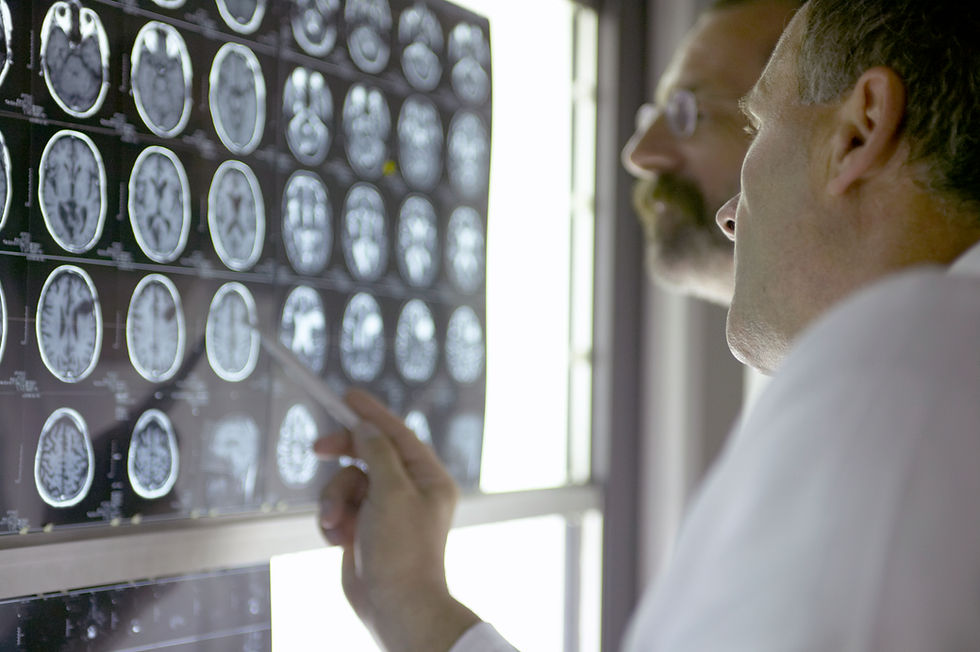
It should come as no surprise that aging causes a decline in our brain functioning, but how and when does this occur? Scientific studies show that our brains begin to first atrophy in our 30s. Brain atrophy is the process by which neurons and their connections (synapses) start to undergo necrosis (cell death). These changes can be seen not only in pathological brains, but in healthy brains too.
Atrophy in healthy brains differs from that seen in pathological brains in that it tends to be diffused and globalized. Typically, in a pathological brain, we are able to identify specific locations where damage has occurred and their resulting effects. For example, in an individual with an operable low-grade glioma in their occipital lobe, we can anticipate localized functional impairments specifically in visual and spatial skills (as the occipital lobe primary handles these cognitive functions).
In contrast, with a healthy brain, atrophy occurs more diffusely, and individuals present with functional impairments throughout their cognitive profile. This is of particular importance in the medical-legal world as we often see individuals who have global decline across all cognitive domains (i.e. attention, memory, language, visual-spatial, and executive functioning). When a patient presents with these symptoms, it is important for doctors to consider age related changes in addition to the injury/injuries in question.
That said, presentations with global decline are usually quite mild and statistically unremarkable until later in age. And lifestyle plays a vital factor. If patients have not adhered to a healthy lifestyle and introduced numerous neurotoxins into their bodies, this could accelerate the atrophy process and its effects would show up sooner. Neurotoxins, such as nicotine and alcohol, are scientifically proven to damage our brain cells and accelerate the atrophy process. In addition, both increase our risk of vascular disease which can lead to stroke-like events.
Genetics also plays a significant factor. It’s commonly known that Alzheimer’s is a disease that leads to dementia and is hereditary, but Alzheimer’s is only one of many neurodegenerative diseases that can cause dementia. Numerous neurological diseases, including Parkinson’s and Huntington’s, are hereditary in nature and can cause dementia over time. Furthermore, other medical conditions which are hereditary (i.e. Diabetes, cardiovascular diseases) are correlated with an increased risk of infarctions/ischemias within the brain. Understanding your family history is vitally important in anticipating your cognitive risk factors.
It seems as though mother nature is playing a cruel joke on us given that our brains are not fully developed and matured until our mid 20s, yet atrophy begins as early as the age of 30. Does this mean we have just 5 years of optimal brain functioning? Yes and no. Cognitive decline is an inevitable reality of aging. We can certainly delay the process by living a healthier lifestyle (i.e. Working out, maintaining a healthy diet, avoiding/limiting neurotoxins) to keep our brains as healthy as possible. Building a good cognitive reserve is also important. Stress management (i.e. Going for a walks), mental stimulation (i.e. Reading or playing cards) and meaningful social engagements (i.e. Meeting with an old friend for lunch or joining a running club) will also build the brain’s resilience. Further, numerous longitudinal studies in cognitive training have proven its efficacy. Cognitive training is like physical training, but for your brain; think mental workout sessions to strenthen neural connections in the brain. In fact, a study by the Center for Brain Health found that after consistent cognitive training for a period of 3 months, subjects increase their cortical thickness in the frontal and parietal cortices and reduce age-related brain shrinkage. Altogether, we can not only delay the process of brain shrinkage, but we can actually grow our brains!
In the past, cognitive training was thought of mostly as rehabilitation for stroke victims or TBI patients, but more and more, healthy adults are taking up cognitive training in various forms as a part of their healthy living (just like physical training). So next time you see that Sudoku book at the airport, pick it up, or challenge your family members to a game of Scrabble. Let's all strive to be super agers!